Yes. That's the short answer, and coming from a company that makes one, it's also the suspicious answer. So here's the longer one, and it starts with the bottle you'd be leaving. The softness most liquid conditioners deliver is not hydration. It's dimethicone, a silicone that coats each strand in a thin, smooth film. Hair feels finished the moment it dries because something is sitting on top of it, not because anything changed underneath.
The coating has a catch. Silicone builds up, and buildup demands sulfates to strip it back off. Stripped hair feels rough, rough hair reaches for more conditioner, and the two bottles in your shower settle into a rhythm of solving each other. Coat, strip, coat again. Softness on those terms is a rental. Miss a payment and you find out what you actually had.
The rented-softness loop
Silicone coats the hair. The coating builds up. Sulfates strip the buildup, and stripped hair reaches for more silicone. Every wash pays the same toll. The loop is not a flaw in the system. The loop is the system.
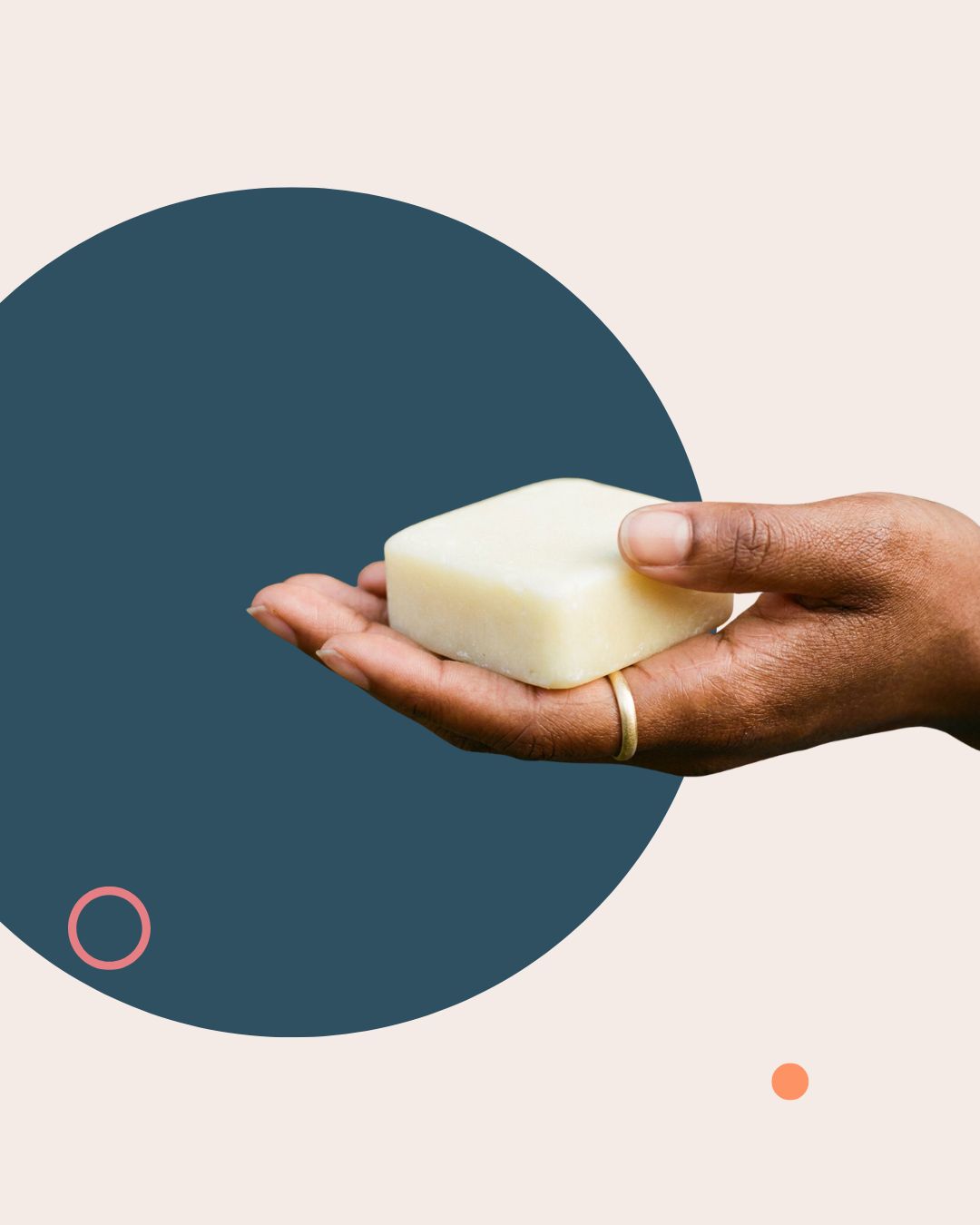
A conditioner bar built right doesn't enter the loop. The Cocoa Almond Conditioning Bar conditions with cocoa butter and argan oil, two of the few emollients that penetrate the hair shaft instead of resting on it. Cocoa butter melts at body temperature and binds water into the cuticle. Argan oil, rich in omega-9 fatty acids and vitamin E, is small enough to get inside the strand and repair micro-damage from the inside out. Jojoba adds slip without weight. Nothing coats, nothing needs stripping, and the softness is real, not borrowed. It holds after a silicone film would have washed away.
And if the word bar makes you think of soap, it isn't one. There's no lye and no lather here; a conditioner bar is a conditioning cream with the water removed, carried in fatty alcohols and butters. The conditioning agent, behentrimonium methosulfate, reads alarming and isn't. Methosulfate is not a sulfate detergent, and cetyl alcohol is not drying alcohol; it's a waxy fat, and it's doing the softening. The full chemistry is here.
What working looks like in practice: the bar wants drenched hair. Glide it from mid-lengths to ends with the water running, keep going until the water and conditioner build into a light cream, then give it a minute or two before the rinse. Thick, curly, and color-dry hair drink it up fastest. Fine hair wants one or two passes, ends only. The technique is different from the bottle, and the method is four moves.
So, do conditioner bars work. Yes, and arguably better. The bottle sells the feeling of conditioned hair, and the film does the feeling. The bar conditions with what hair keeps.